
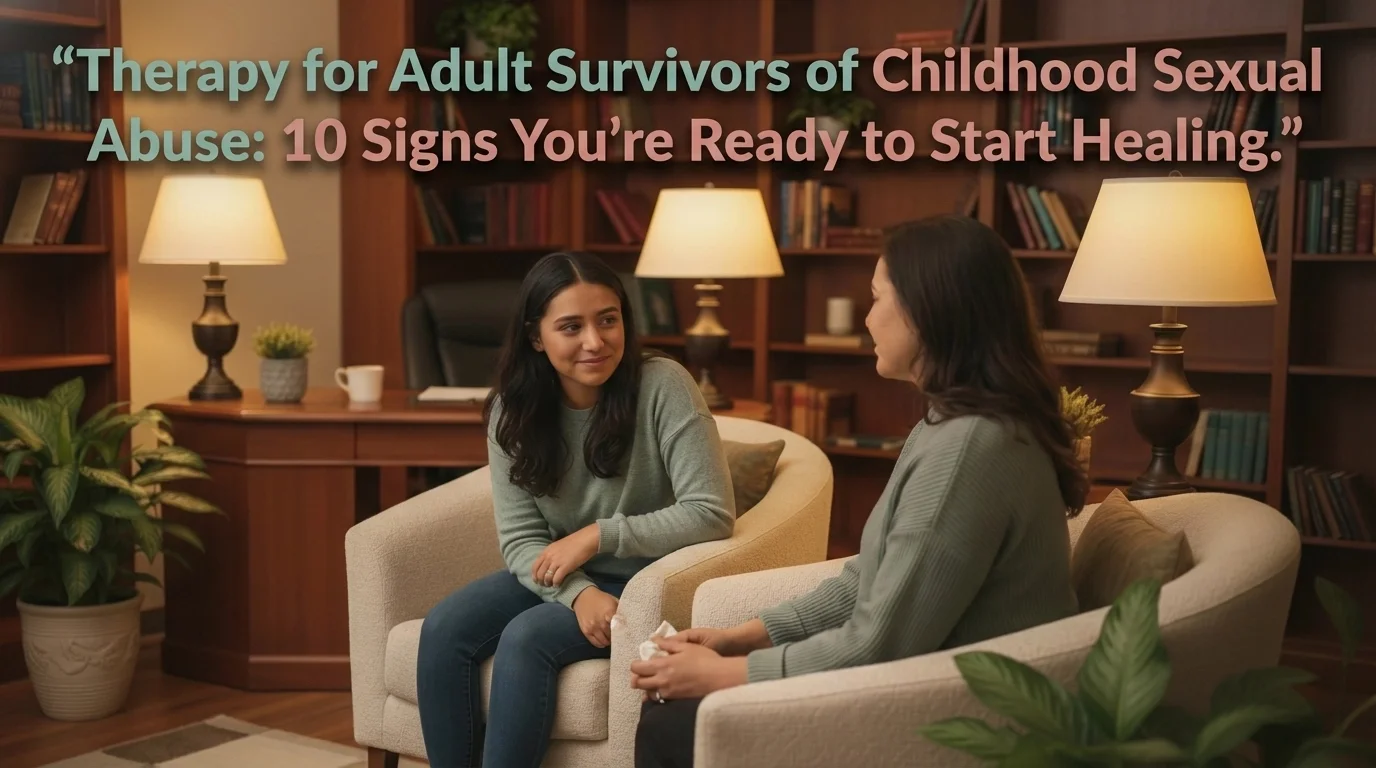
The question isn't whether you deserve to heal from childhood sexual abuse: you absolutely do. The real question is whether you're feeling ready to take that brave step toward professional support.
If you're reading this, something inside you is already stirring toward healing. Maybe you're tired of carrying the weight alone, or perhaps you've noticed patterns in your life that trace back to your childhood experiences. Whatever brought you here, know that simply considering therapy is already a meaningful step.
There's no "right" time to start therapy. Healing isn't about perfect timing: it's about recognizing when professional support could help you reclaim the life you deserve. Here are ten signs that suggest you might be ready to begin this important journey.
1. You're Experiencing Persistent Anxiety, Depression, or Flashbacks
Your nervous system has been carrying trauma for a long time, and it shows up in ways that might feel overwhelming. Maybe anxiety keeps you awake at night, or depression makes even simple tasks feel impossible. Perhaps flashbacks transport you back to moments you'd rather forget.
These aren't signs of weakness: they're your brain's way of processing an experience that was too much to handle when you were young. When these symptoms start interfering with your daily life, therapy can provide you with specific tools to help your nervous system find safety again.
A trauma-informed therapist understands that these reactions are normal responses to abnormal experiences. There's no shame in needing professional support to navigate them.
2. Your Relationships Feel Difficult or Unsafe
Childhood sexual abuse often impacts how we connect with others. You might find yourself building walls to feel safe, or perhaps you struggle with boundaries. Maybe intimacy feels frightening, or you find yourself in relationships that somehow echo the power dynamics from your past.
Trust doesn't come easily when it was broken so early in life. If you notice patterns in your relationships that leave you feeling lonely, misunderstood, or unsafe, therapy can help you explore these connections in a safe space.
You deserve relationships that feel nourishing and secure. A skilled therapist can help you understand how your past experiences influence your present relationships and guide you toward healthier connections.
3. You're Carrying Overwhelming Shame or Guilt
That heavy feeling in your chest: the one that whispers you're somehow damaged or at fault: that's shame talking. It's one of the most painful legacies of childhood sexual abuse, and it's also completely undeserved.
If you find yourself trapped in cycles of self-blame or feeling like you need to hide parts of yourself from the world, you're carrying a burden that was never yours to bear. The shame belongs to the person who hurt you, not to you.
Recognizing this shame is actually a sign of readiness. When you can name it, you can begin to separate it from your true self. Therapy provides a space where you can safely examine these feelings without judgment and learn to practice self-compassion instead.
4. You Feel Isolated and Disconnected
Childhood sexual abuse can make the world feel unsafe, leading many survivors to withdraw from others. If you've found yourself pulling away from friends, family, or social activities, you're not alone in this response.
Isolation might have felt protective when you were younger, but it can become a prison that keeps you from the support and connection you need to heal. Strong, supportive relationships have a profoundly positive impact on recovery.
If loneliness is intensifying your pain, or if you recognize that isolation is no longer serving you, therapy can provide that crucial first safe relationship. A trauma-informed therapist can help you slowly rebuild your capacity for connection.
5. You're Ready to Reclaim Your Life
Sometimes there's a moment: maybe quiet, maybe dramatic: when something shifts inside you. You might look around at your life and think, "This isn't who I want to be" or "I deserve better than this." Maybe you're tired of letting the abuse define your choices.
This readiness doesn't require you to feel brave or strong all the time. It just requires a small spark of hope that things could be different. When you can imagine a life where the abuse doesn't control your decisions, you're touching something powerful: your own resilience.
That spark is enough to begin. You don't need to have it all figured out or feel completely ready. You just need to want something different for yourself.

6. You're Becoming Aware of Trauma Responses
Maybe you've started noticing patterns: how you freeze when someone raises their voice, how you become hypervigilant in crowds, or how you dissociate when you feel threatened. Perhaps you've learned about trauma responses and recognized yourself in what you've read.
This growing awareness is actually a sign of healing beginning. When you can observe your responses rather than being completely consumed by them, you're developing what therapists call "dual awareness": the ability to be present with your experience while maintaining perspective.
Therapy can help you understand these responses as adaptive strategies that once kept you safe, while also learning new tools for the present moment.
7. You Want to Challenge Negative Self-Talk
That critical voice in your head: the one that tells you that you're worthless, damaged, or somehow responsible for what happened: isn't telling you the truth. If you're beginning to question those harsh inner messages, you're already doing therapeutic work.
Maybe you've started noticing how differently you speak to yourself compared to how you'd speak to a friend in the same situation. Or perhaps you're tired of the constant self-criticism and want to learn a gentler way of being with yourself.
Therapy can help you identify the difference between your authentic voice and the internalized messages from your trauma. You can learn to speak to yourself with the compassion you deserved as a child.
8. You're Experiencing Body-Related Triggers
Your body holds the memory of trauma, and you might be noticing this in various ways. Perhaps certain touches feel triggering, or medical exams become overwhelming. Maybe you struggle with eating, sleeping, or feel disconnected from your body altogether.
These physical responses are completely normal after sexual trauma. Your body was violated, and it makes sense that it would develop protective responses. If you're noticing these patterns and want to heal your relationship with your body, therapy can help.
Specialized approaches like somatic therapy can help you reconnect with your body as a source of strength and wisdom rather than a place of fear.
9. You're Curious About Professional Support
The fact that you're reading about therapy suggests something important: a part of you is open to the possibility of healing. Many survivors delay seeking help due to fear, shame, or feeling like they "should" be able to handle it alone.
But curiosity about therapy, even mixed with apprehension, indicates readiness. You don't need to feel completely comfortable with the idea or know exactly what you want to accomplish. You just need a willingness to explore.
If you find yourself researching therapists, reading about trauma recovery, or imagining what it might be like to share your story with someone trained to help, you're already moving toward healing.
10. You Recognize That You Deserve Support
This might be the most important sign of all: recognizing that you deserve care, support, and healing. After childhood sexual abuse, many survivors struggle with feeling worthy of help or investment.
If you can acknowledge: even in small moments: that what happened to you was wrong, that you didn't deserve it, and that you deserve support in healing from it, you're touching a truth that can transform your life.
You don't need to feel this constantly or completely. Even fleeting moments of self-compassion indicate a readiness to receive the care and support that therapy can provide.
Taking the Next Step
Recognizing these signs in yourself is already an act of courage. Healing from childhood sexual abuse is possible, though it's rarely linear or simple. It requires patience, self-compassion, and often professional support from someone who understands trauma.
If several of these signs resonate with you, consider reaching out to a trauma-informed therapist who specializes in childhood sexual abuse. Look for someone trained in approaches like EMDR, somatic therapy, or trauma-focused CBT: all evidence-based treatments that can help you process your experiences safely.
Remember, you don't need to be "ready enough" or have it all figured out. You just need a willingness to begin. Your healing matters, your story matters, and you deserve the support it takes to reclaim your life.
The courage to consider therapy is already within you: the same courage that helped you survive what happened to you. Trust that inner wisdom. It's been guiding you toward healing all along, and now it's ready to help you take this next important step.
If you're ready to explore therapy for trauma recovery, reach out to begin a conversation about your healing journey. You deserve support, and help is available.